

How to Teach Your Dog to Retrieve
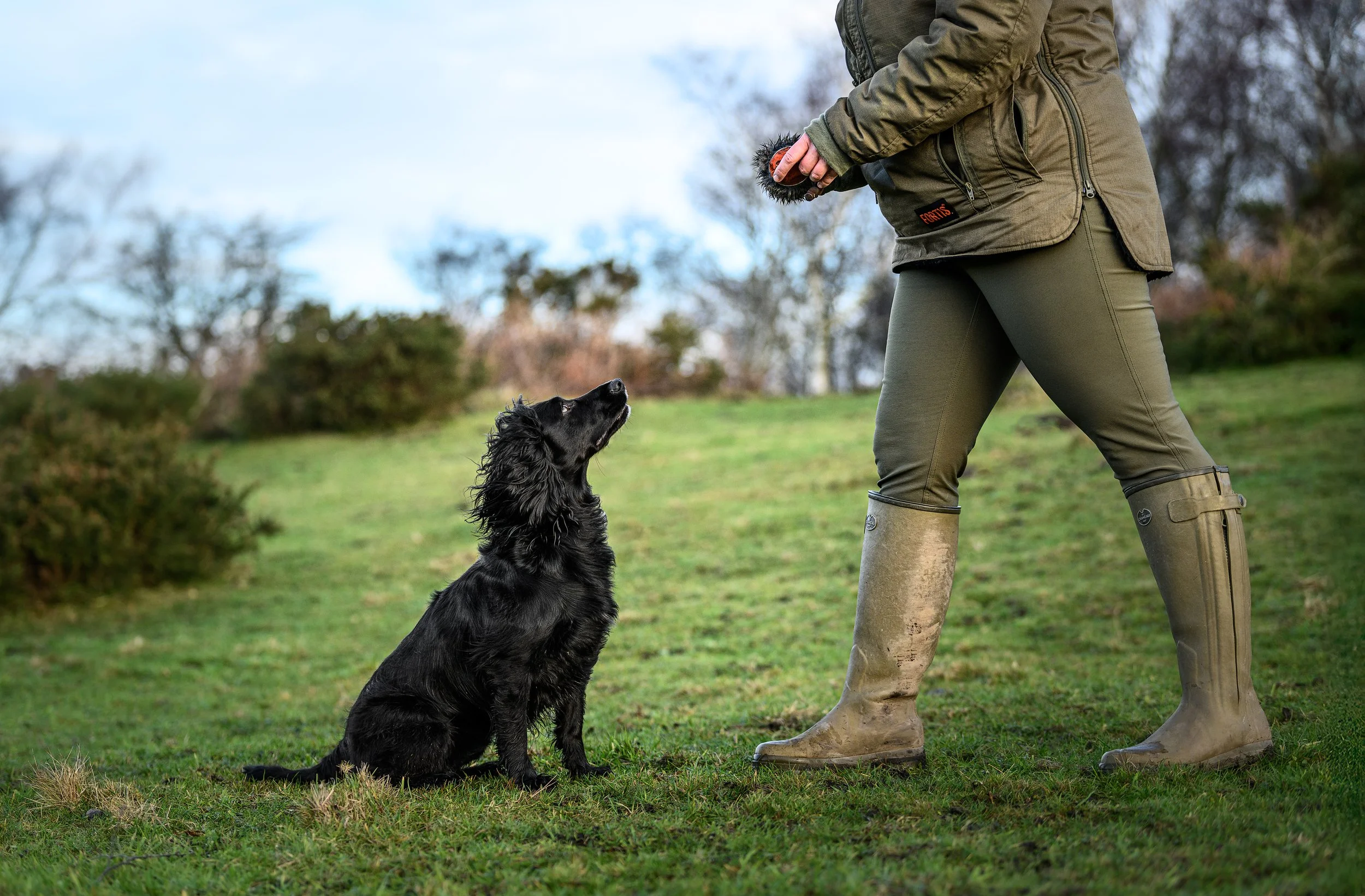
For a Spaniel, retrieving is part of what they are bred for. We teach a Spaniel to retrieve to fulfil their natural drive, but it can also help us train recall, build a bond with our dog, and even help prevent resource guarding. But not all dogs will automatically know how to play fetch. While most Spaniel puppies will instinctively chase a thrown toy and bring it straight back, many will run off with it, drop it halfway, or lose interest entirely. This doesn’t mean your dog isn’t interested in retrieving or that they can’t learn. What it means is – we need to teach them!
This guide will help you to learn how to teach your dog to retrieve.
Why Retrieve Training Matters
Teaching your Spaniel to retrieve has so many benefits that go far beyond a simple game of fetch. It is a great outlet for their energy, as it uses their natural drive and brain power. Retrieving also teaches them that bringing things to you leads to fun, praise, and continued interaction. So instead of grabbing items and avoiding you or guarding them, they learn to bring things to you. It lays the groundwork for good impulse control and cooperative play.
And once your dog is retrieving in a simple out and back way, you can build on this with marked retrieves, memory retrieves, stop commands, directional retrieves, and even hunting games!
How To Teach Your Dog To Retrieve
Create a Training Lane
Environment matters. Starting indoors is ideal, as distractions are minimal and your dog is more able to focus. You can make the exercise much clearer by creating a “training lane” using furniture, chairs, or walls to form a narrow corridor.
This setup removes unnecessary choices and helps your dog understand the game. Instead of running off in different directions, your dog can only move forward to get the toy and back toward you. This clarity speeds up learning and prevents confusion in the early stages.
Make It Fun Not Formal
At the beginning, fun is far more important than formality. So when you first start to teach your dog to play fetch, focus on making retrieving exciting. Don’t worry about neat delivery or formal sitting and waiting.
Crouch down to your dog’s level, use animated praise, and encourage them to come back toward you without demanding a sit or a perfect handover. Allow your dog to enjoy carrying the toy for a moment before taking it back. This helps build value in the retrieve rather than creating pressure that can reduce motivation.
Tip: Use a toy your dog finds genuinely motivating, such as a rabbit ball or dummy, and keep your energy high!Keep Sessions Short and Fun
Short sessions are key to successful retrieve training. A few repetitions done well are far more effective than long sessions that lead to frustration or boredom. Always aim to stop while your dog still wants more, as this builds anticipation and drive for the next session. It will leave your dog feeling successful and eager to play again.
Step By Step Video Guide
To help demonstrate these steps, here’s a short video where we use a gate to create a very simple retrieving lane. When you first start retrieving, make a training lane inside and make it fool proof so your dog can’t escape!
Retrieving should be fun, rewarding, and stress-free
Time, fun, and consistency is key to building a great retrieve. Keep things as fun as possible with your dog and remember that you are building the foundations for years to come!
